
Homeless
Cranky epidemiologist changes his tune

I woke up thinking about Ivy Jeanne, because I had run into her in the street. She worked for me when I did studies in the homeless population in San Francisco, which I did for about twenty years beginning in the late 1980s. In those days the San Francisco adult homeless were mostly people whose lives had been destroyed by crack cocaine. I would see Ivy around the homeless studies and even after I left UCSF I would see her on the street. When I saw her I would think of her as the spirit of the street.
I started doing AIDS studies in the homeless and moved on to tuberculosis (a disease which follows closely behind AIDS) and then on to hepatitis B and C. We used lunch lines to recruit people living on the street, working from the two huge free lunch lines at Saint Anthony's and at Glide in the Tenderloin. We also recruited at the two big homeless shelters, on the edge of the Tenderloin, and at the SRO hotels, which are mostly in the Tenderloin too. The SRO hotels were, and are, full of people on federal disability, SSI or SSDI. Drug addiction could get you on SSDI in those days and hence into a hotel. The Tenderloin is there for a reason - -that's where the services are.
I had a dedicated crew -- outreach workers, interviewers, nurses and phlebotomists -- who roved the city doing my studies. They were willing to work almost anywhere, including actually on the street if we had to and also in the kind of hotel where you found residents stuck to their beds by leaking wounds. We also did overdose-prevention work in the Tenderloin hotels, because that's where most of the overdoses were.
The outreach workers, who worked out on the street, were aggressive skateboarders, tattoed musicians with punk attitudes, militant lesbians, part-time strippers from the Lucky Lady in North Beach and one very tall transgender person (who the others were very protective of) who ended up in Thailand. Ivy Jeanne was a drummer in a punk band that popped up every once in a while playing loud illegal concerts in doorways on Mission Street. You can sometimes still see Ivy's graffitti around the city, cheery self portraits of a blond kid with big teeth and pigtails. She was a hard-core harm reducer, dedicated to the welfare of the street kids in the study. They were a colorful bunch, my outreach workers, very ideological in their harm-reduction approach to the homeless and absolutely dedicated to the work. I liked their outlaw ethos -- after all, that's how I thought of myself: outlaw epidemiologist
In those days we had study offices on Ellis Street, near Glide, and on 6th Street opposite the needle exchange.I watched the busy street life. I liked it; it was lively. It was friendly too; people seemed to appreciate what we were doing. And I generally managed to convince myself that we were doing something useful.
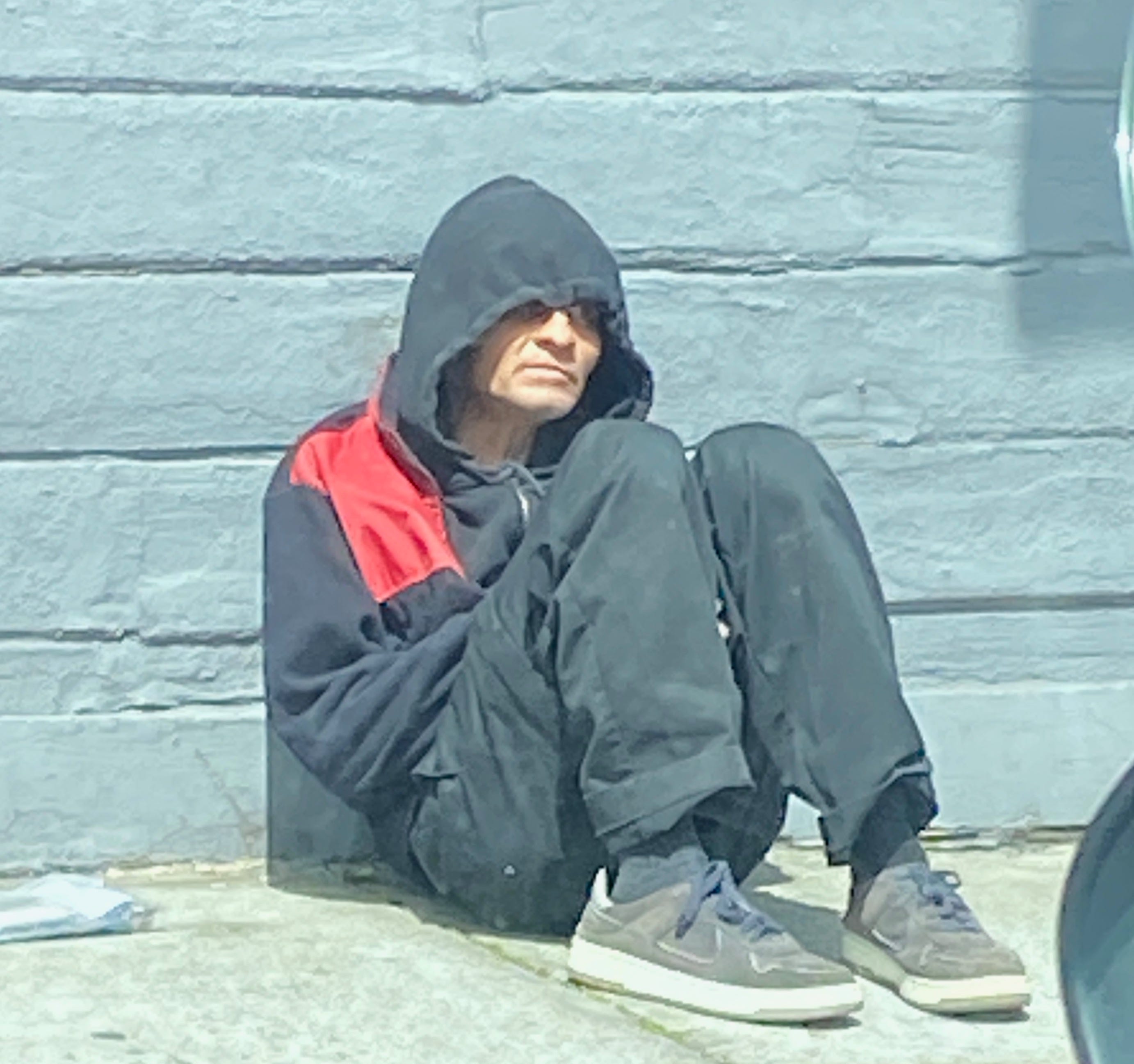
After a while we began a separate study of street kids who were injecting heroin, mostly teenagers. We recruited them mainly on Haight Street. It wasn't easy to find a place to work in the Haight because the local householders hated the street kids. We got thrown out of two churches and the local public library before the Haight Ashbury Free Clinic took us in.
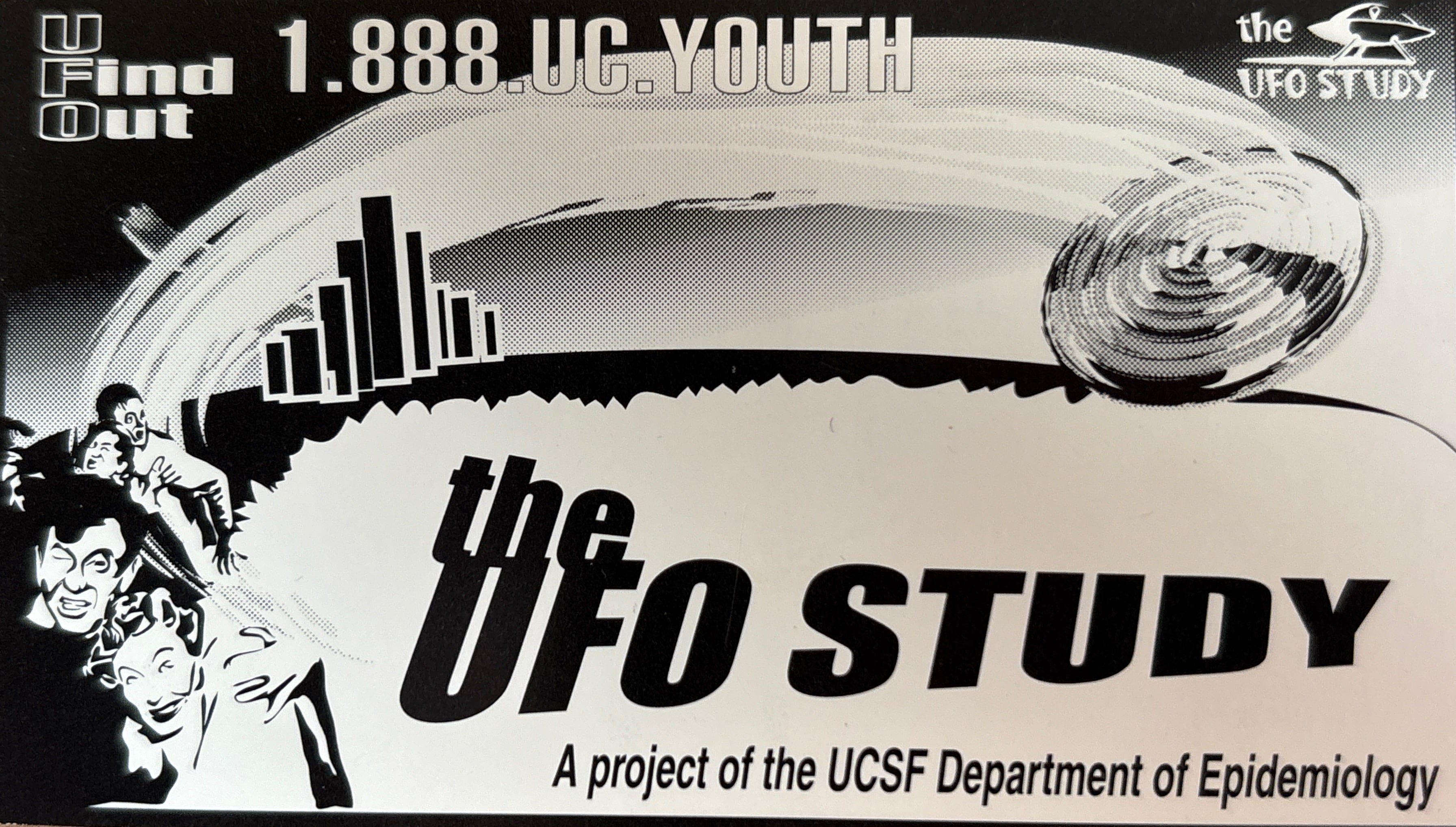
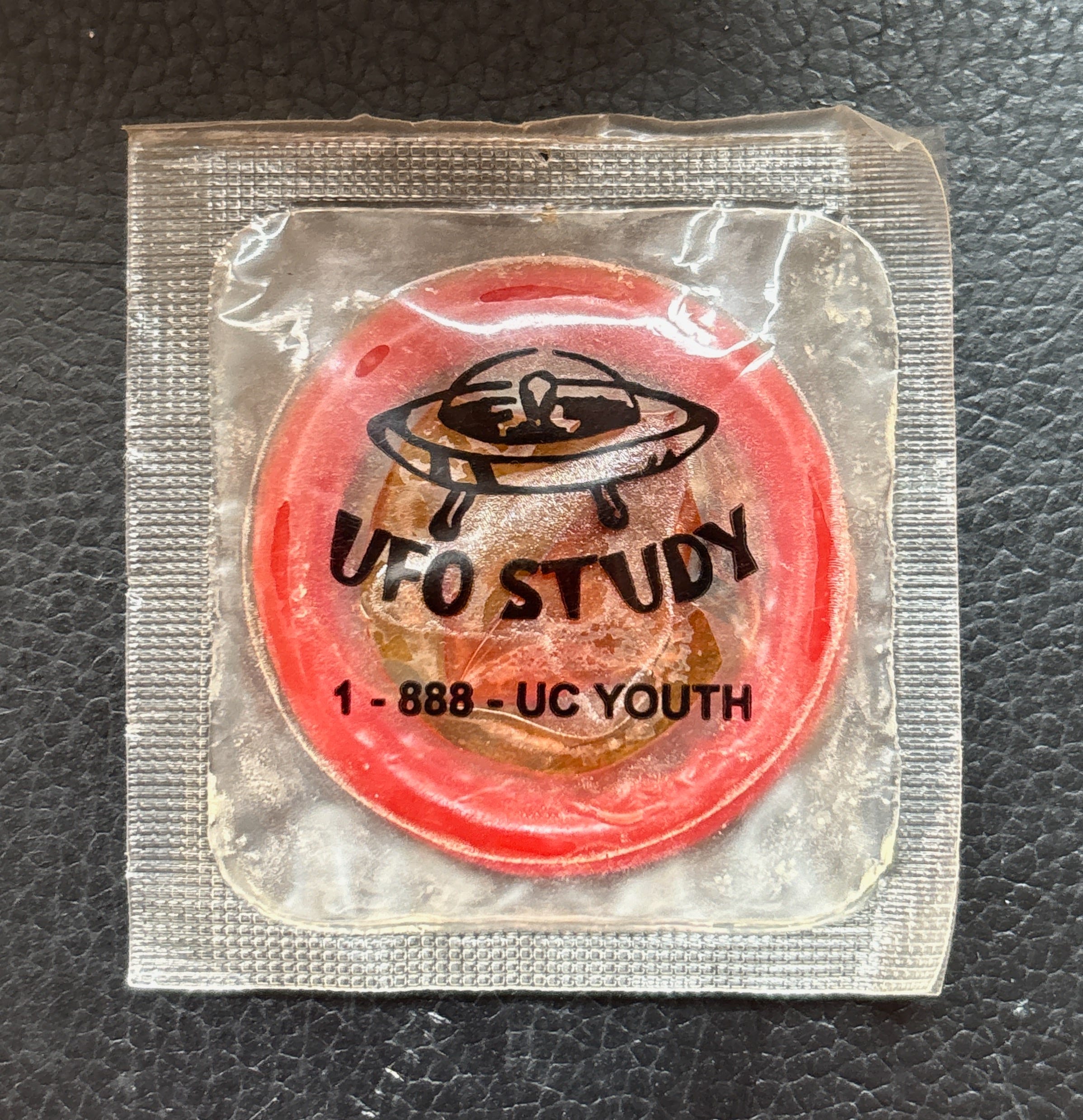
We called the street-kid study the UFO study, possibly standing for "You Find Out", i.e. you find out your hepatitis B status, but more likely because everybody liked the space-oriented graphics which proliferated around the study. The logo was a tiny flying saucer, which I once tried to get a tattoo artist to tattoo on my arm. (He refused. "It'll close up," he said.) The ideology of the UFO staff was "harm reduction," which came out of the movement to provide clean needles to the addicted. The idea was that while dealing with addiction was hard, you could reduce the harm associated with it (i.e. infections, for one thing) and therefore you should do that, and not demand that everybody get clean immediately. All my staff were harm reducers, partly because it was a belief system that enabled you to hang out with the injecting kids. And partly because, like Ivy Jeanne, some of them were not so far away from the street kids themselves.
It turned out that after one year of injecting, the street kids were almost guaranteed to be infected with both hepatitis B and hepatitis C. Thus if you start with adult injectors, it's too late for the hepatitis B vaccine, they've all got it already. (There is no vaccine for hepatitis C yet). But with the kids, if you catch them early enough you can vaccinate them. Ivy was one of the outreach workers who found the kids and kept contact with them so we could bring them back for the second hepatitis B shot. We did a study to see if a relatively small amount of money would bring them back, and it did. Small amounts of money worked for TB prophylaxis in the adult homeless too, where you have to bring them back once a week for six weeks. I was proud of these studies ("Randomised controlled trials of financial reimbursement,") because they were interventions that worked in populations that most people considered hopeless. They were published, too (see below). It was the outreach staff who made these studies work
Ivy, I found out when I ran into her, is still doing harm reduction work, handing out clean needles and so forth at a center right off of Sixth Street, where the Tenderloin extends south of Market. She is now a very experienced advocate for harm reduction and other interventions with the poor/homeless/street people. She is also a curating a radical history of San Francisco in the back of the harm-reduction center, which is worth a visit.
But I'm not sure I agree with Ivy any more.
Karen, who was the boss of the outreach workers, emanated a high moral line. She was an ideological lesbian and a rescuer of wounded pit bulls. Her staff all believed deeply in what they were doing . My studies had distinct personalities because the UFO kids were even more vulnerable than the adult homeless. There are some populations that you, the epidemiologist, can only work with if you are sympathetic, which was the case with the UFO study. There are others you can only work with if you are actually an advocate-- sex workers, for example. (Or, I suppose, you could just be callous, but it's hard to be that callous with the truly vulnerable or the truly wounded. I never did a sex worker study... too tricky.)
It was the street kids who finally got to me. Karen, the saviour of pit bulls and a hard-core harm reducer, had a theory about the young injectors: all they needed was a job, and then they would straighten out. She talked me into hiring them -- basically active injectors, although by convention and to keep the University off my back we described them as recovering heroin users, which they also sometimes were. But they weren't recovering fast enough and they started dying while on my payroll -- of overdoses, of course, and this was even before fentanyl. Three of them died -- three very young people -- and I began stepping backwards from the UFO study. (But the epidemiological part of my brain said Andrew, you ought to do a mortality study! Find out what the actual risk is....)
Who died? A skateboard kid for one. A punk bandleader that my son liked and filmed for another. I forget the third. Enough to give me the creeps. Because what was the University going to do if it found out I had three young people die of overdoses while on my payroll? And was I being complicit, or at least codependent, with their lethal addiction habits?
The answer to the second question, I began to think, was "yes."
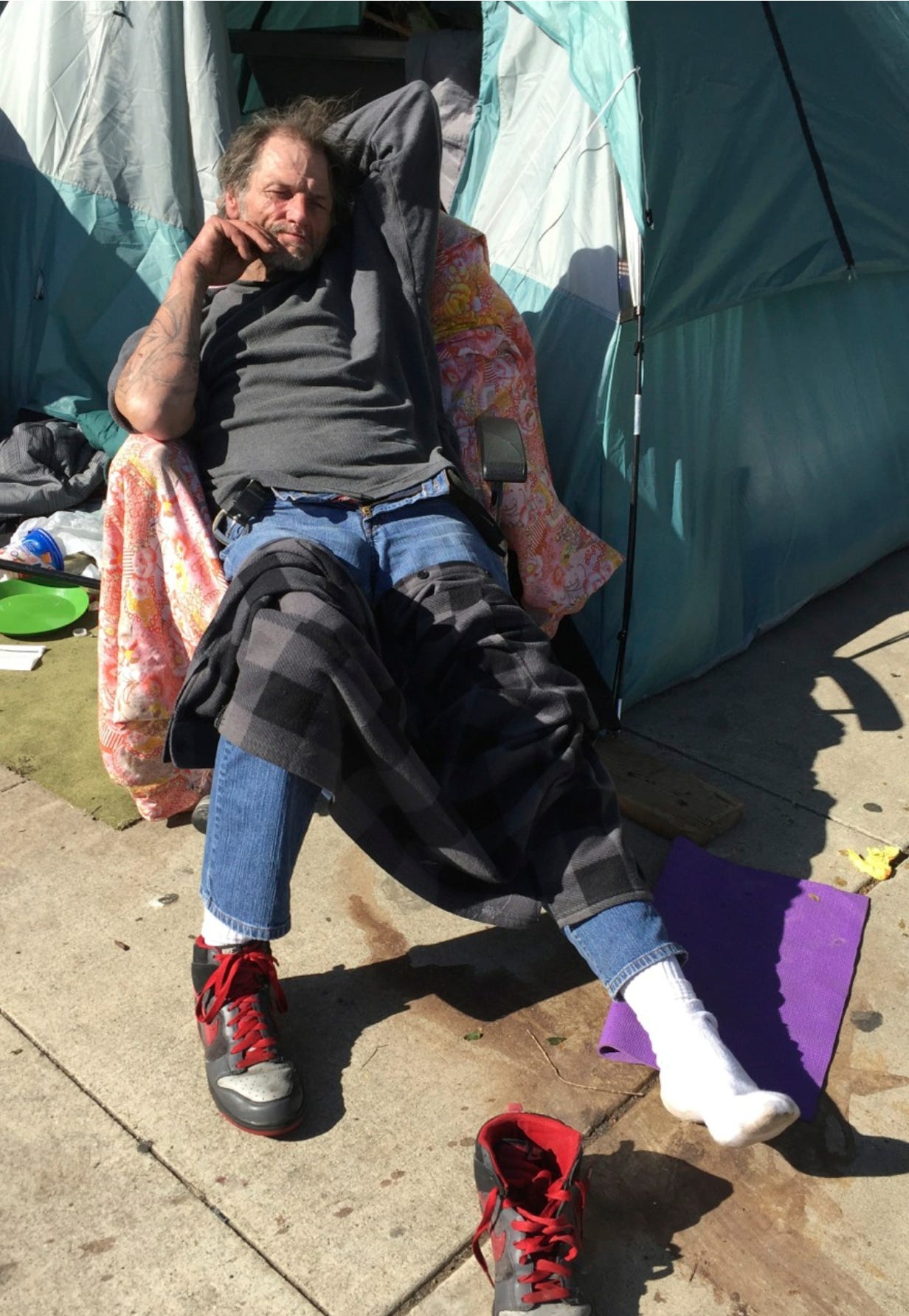
So, back to the adult homeless, the people you see in the drug-infested Tenderloin, or down along Sixth Street, or increasingly along Mission Street, or at the Center City Market on sunday mornings. The people that everybody has begun to hate and that the city now has a sort of mandate to push off their camp sites.
I realize I have run out of sympathy with the homeless. I want the filth-encrusted encampments to go away. I don't want us tolerating people dying on the street, etc. And I have begun to think that San Francisco's policy (which is not that different from Portland's or Seattle's, or LA's) is, like my policy with the street kids, codependent. I look back to Willie Brown, who with a wave of his hand caused the homeless to disappear from their encampments outside his window in Civic Center Park, a few years ago. It can be done, I think. You can get them out of the public spaces.
****
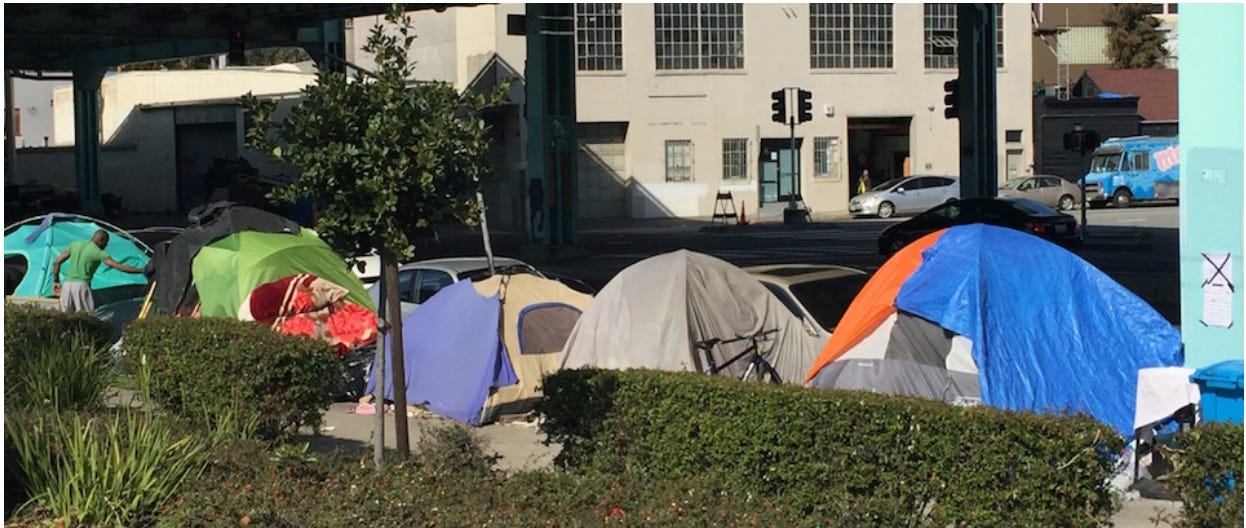
I last tried to engage with all this rationally in 2016 when there was a giant encampment along Division Street, under the freeway. I counted more than two hundred tents in the Division Street encampment. The city (again at the instigation of Willie Brown ) cleared the encampment. I wrote about this for California magazine (see below), and I formulated a position: let's have legalized camping sites. I still think legalized camping is part of a solution, along with bringing back the State Hospitals for the truly incompetent and a very hard-line policy with drug dealers (sorry, Ivy Jeanne). The city had at least three legalized camping sites in 2016, but they appear to have gone away.
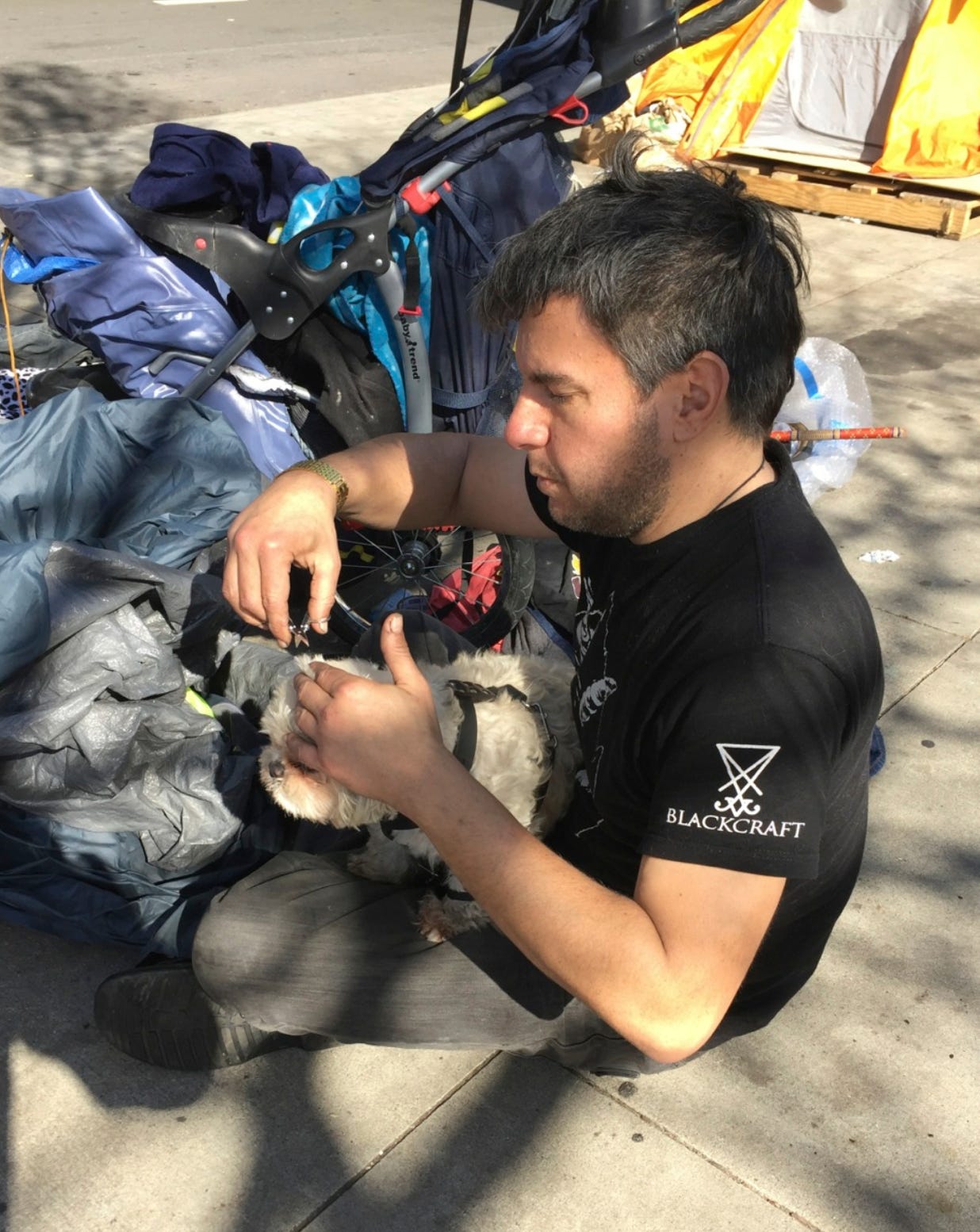
I think a certain hardness of nose is essential. San Francisco is quite capable of strangling itself on its own compassion (while congratulating itself at the same time). It's easy to feel morally righteous about a tolerant policy towards the homeless while never actually engaging with them. And the adult homeless are heavily African -American, which really paralyzes thinking about intervention in this guilty city. And after all, we say to ourselves, a poor person can only afford to live here in San Francisco by being homeless. Or living in an RV. (And in fact that’s a rational solution. We should have legalized RV parks too.)
The Achilles Heel of homeless interventions is this: if you make it easy for the homeless, more will move here. So you can't make it too easy; you have to oscillate between compassion and the hard nose. For the determined harm reducers who worked for me (like Ivy Jeanne) this is heresy, I am abandoning compassion as the basic principle of intervention in favor of keeping the streets clean and the drug dealers at bay. But I am. I believe, with Hannah Ahrendt, that a democratic polity needs a public life, and a public life needs viable public spaces. If it takes more shelters (which nobody likes) and legalized camp sites and vehicle parks, plus a revival of the State mental hospitals and a hard line with people who refuse to use any of the above, well then that's what it takes. Yes, it's hard and yes its expensive but we're spending hundreds of millions on the homeless anyway, without visible success.
Now I have to go see Ivy Jeanne and try to explain myself.
(For incentives see Tulsky, J, et al: Can the poor adhere? A clinical trial for cash incentives for adherence to TB prophylaxis in homeless adults. Int. J. Tuberc Lung Dis. 8(1) 2004. For my piece on the Division Street encampment see https://alumni.berkeley.edu/california-magazine/online/division-street-debacle-nothing-else-works-why-not-legalize/.)
Yup, I remember all this too, and pulled back as well. I have been asking for camping grounds too -- why is that not on the table?
Excellent article Andrew. I agree with your point of view. Would the SF Chron publish some of your stuff? Seems to mesh with a recent Ezra Klein interview re crime, drugs, and disorder.